
Backgammon Clubs
Whatwapp EntertainmentBoard
4.5406.00 Reviews
- Version
- 1.28.7
- Installs
- 500.00K
- Age Rating
- Everyone
Screenshots







Our Review of Backgammon Clubs
 Analysis by Appyee
When I open a backgammon game, I want to get to the board quickly, make a meaningful move, and have a reason to play another round. Backgammon Clubs is built around that familiar cycle: roll, weigh the options, move, and see whether the position you created holds up against another player. The dice bring luck into every match, but choosing how to use them is what keeps me thinking. That mix makes this board game a good fit for short breaks as well as longer stretches when I’m in the mood to concentrate.
The first useful choice is what kind of opponent I want. I can practice against the AI or take on a real player, so a quiet moment alone and a more competitive session both have a place here. I wouldn’t treat a match as a test of skill alone: a strong decision can still meet an awkward roll, and a lucky sequence doesn’t necessarily mean I played well. For me, the appeal is learning to make the best of the position in front of me, then resetting for the next game.
Starting with a move, not a long setup
The app is a free board game from Whatwapp Entertainment, and its basic premise is easy to grasp if you already know backgammon. New players can use the tutorial to learn the rules before taking a first turn, which is more useful than being dropped straight into a match and expected to know how pieces move. I’d still recommend taking that introduction slowly: knowing what a legal move is and understanding why one move is safer than another are different things.
A practical first session is to try a few games against the AI before joining other players. That gives me room to check the board, pause over possible moves, and notice how the dice affect my options without also worrying about keeping pace with an opponent. Once the basic movement feels familiar, multiplayer gives the same rules a different energy. The board stays recognizable, but another person’s decisions make each turn less predictable than a practice round.
How the match keeps its rhythm
Backgammon’s feedback arrives in small, immediate pieces: the dice show what I can do, my move changes the board, and the opponent’s response reveals what I left exposed. That rhythm is the strongest reason I come back. It makes even a short session feel active rather than like a passive streak of animations. A turn can be straightforward, but a decision about whether to protect a piece or pursue a faster route gives me something concrete to consider.
The app’s interface follows the traditional board layout, with colors that I find comfortable to look at. It also offers a choice of boards, so I can pick a look that suits me; I’m partial to the classic wooden style because it feels close to a physical set. Cosmetic choice doesn’t change the strategy, but it does make repeated visits feel a little more personal. If I’m playing for a while, a board I enjoy looking at is a small benefit that adds up.
Practice, competition, and the reward of progress
When I want low-pressure practice, I can play against the AI, with difficulty that varies. When I want the uncertainty of a human opponent, I can enter multiplayer and see how another player handles the same changing rolls. The game also has matchmaking intended to pair players of similar skill, which helps make competitive play approachable. I’d think of that as a way to find a more suitable challenge, not a promise that every match will feel perfectly even.
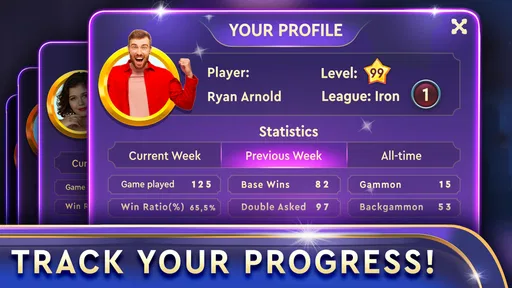
Rankings, statistics, and leaderboards give competitive sessions a longer-term thread. After a match, I can look beyond the result and consider whether I’m making progress or repeating a mistake. One useful habit is to focus on a single decision from a finished game rather than treating a win or loss as the whole story: did I leave a piece vulnerable, or pass up a safer move? That kind of quick review makes the stats more meaningful and keeps the reward tied to learning, not just climbing.
There’s also a social reason to stay. Players can join or create clubs, chat, and take part in tournaments. I like that those options give a familiar opponent or group a chance to become part of the routine instead of making every session feel like a one-off match. Tournaments add a goal beyond an individual game, while club chat can make it easier to share the experience. Virtual prizes and bragging rights are light rewards, but they suit a game where the main satisfaction is still in the play itself.
Where this version fits among backgammon options
Compared with a plain digital board game focused only on a match against the computer, this one puts more emphasis on multiplayer, clubs, tournaments, and visible progress. That makes it a better fit for me when I want opponents and a community around the board. A physical set is still the better choice for a relaxed game with someone beside me, and a simpler offline backgammon app may suit someone who wants to avoid social competition or play without needing an online community. The deciding question is whether clubs and player-versus-player matches sound motivating or like extra noise.
For a realistic everyday use, I can imagine opening it during a break, playing one AI game to warm up, then deciding whether I have time for a match with another person. If I only have a few minutes, I’d avoid starting a session when I’m likely to leave mid-game; backgammon asks me to follow a position through to its result. When I have a little longer, I can play, check one statistic afterward, and stop with a small takeaway for next time. That simple routine makes practice feel purposeful without turning a casual game into homework.
Getting Started with Backgammon Clubs
First things first, downloading Backgammon Clubs is a breeze. Available on both Android and iOS, you can grab it from your respective app store. Once installed, the app kicks off with a simple tutorial that even beginners can appreciate. It guides you through the basics of the game, ensuring you’re not left scratching your head when you start your first match.
The interface is clean and intuitive, with a design that pays homage to the traditional backgammon board. The colors are easy on the eyes, which is perfect for those long gaming sessions. The app also offers a choice of boards, allowing you to customize your gaming experience. Personally, I love the classic wooden board design; it adds a nice touch of nostalgia.
Features that Stand Out
One of the standout features of Backgammon Clubs is the variety of game modes. Whether you’re up for a casual game or a competitive match, this app’s got you covered. You can play against the AI, which varies in difficulty, or test your skills against real players from around the globe. The matchmaking system is pretty robust, pairing you with players of similar skill levels to keep things challenging yet fair.
"The thrill of playing against a real opponent is unmatched!"
For those who are competitive at heart, the app includes a ranking system. Climbing the ranks is both rewarding and addictive. You can track your progress through detailed statistics and leaderboards. I find myself constantly checking my stats, trying to figure out how to improve my game.
Social and Community Aspects
What’s a club without a sense of community, right? Backgammon Clubs excels in this area by offering clubs where players can join, chat, and compete in tournaments. The chat feature is handy for friendly banter or strategizing with your club members. Plus, the tournaments offer a chance to win virtual prizes and bragging rights.
- Join or create clubs.
- Participate in tournaments.
- Chat with other players.
These social features create a lively atmosphere that makes you feel like part of a global backgammon community. I’ve made a few friends here and there, and it’s always fun to see familiar faces (or usernames) in the game.
In-App Purchases and Advertisements
Like many free-to-play apps, Backgammon Clubs includes in-app purchases and ads. The purchases are mostly for cosmetic upgrades and additional features like extra dice rolls. The ads aren’t intrusive, usually appearing between matches, and they can be removed with a one-time purchase. I found the balance quite reasonable, and it doesn’t detract from the overall gaming experience.
Final Thoughts
In conclusion, Backgammon Clubs is a must-try for any backgammon enthusiast or anyone looking to dip their toes into this classic game. The app manages to bring a traditional board game into the digital age while maintaining the essence of what makes backgammon so engaging. Whether you’re playing solo, with friends, or competing globally, there’s something here for everyone.
So, what are you waiting for? Grab your phone, download Backgammon Clubs, and start playing. You might just find yourself hooked on this ancient yet timeless game. Happy rolling!
Keeping purchases and expectations in check
The game is free to download, with optional in-app purchases ranging from about fifty cents to two hundred dollars per item. That wide range is worth noticing before tapping a purchase: I’d check the exact item and price in the app rather than assume every offer is a small cosmetic extra. The game is rated for Everyone, but that age label doesn’t remove the need for a parent to consider whether multiplayer chat and spending options fit their household rules.
I’d also be cautious about the idea that purchases can improve a competitive result. Backgammon already mixes decision-making with dice luck, so any purchase connected to additional rolls could affect how fair a match feels to you. If I’m playing mainly for strategy, I’d set a personal rule to enjoy the standard experience first and buy nothing unless I clearly understand what it changes. The point is not that spending is required; it’s that a free starting point and optional purchases call for different expectations.
Who will enjoy it, and who may prefer another board
This is a particularly good fit for someone who already enjoys backgammon and wants opponents, club activity, and a visible record of progress in one place. It can also work for a newcomer willing to learn the rules and accept that improvement takes more than a lucky run. The game’s average rating is 4.6 from around eleven thousand ratings, and it has passed half a million installs, signs of an established audience rather than a tiny niche experiment.
I’d steer away if what you want is a quiet, fully self-contained puzzle with no social layer, or if you dislike competitive play and the swing of dice. In that case, a basic offline board-game app or a physical board with a patient friend is a better match. Someone who finds chat distracting can focus on solo practice, but the app’s club identity is most valuable when community features are part of the appeal.
A sensible routine for learning without chasing rank
For a beginner, I’d use the tutorial as a starting point, then alternate practice games with occasional multiplayer rather than jumping straight into rank chasing. During a match, it helps to ask one question before moving: am I improving my position, or just using every available die as quickly as possible? Afterward, I’d note one exposed piece or one move I wasn’t sure about. That small pause turns the next game into a chance to test a decision instead of merely hoping for better rolls.
For a returning player, I’d use the opposite approach: play a human opponent first, then use an AI game to slow down and revisit a type of position that felt uncomfortable. Clubs and tournaments can supply a reason to return, but they don’t need to dictate how often I play. If a leaderboard starts making a casual hobby feel like a chore, stepping back from rankings and treating each match as its own challenge is the healthier way to keep the loop enjoyable.
Practical details before the first match
The game was released on June 28, 2024, and its current version is 1.21.0, with Android 7.0 as the minimum operating-system requirement. It is developed by Whatwapp Entertainment. I’d check that an Android device meets the requirement before installing; iOS players should use the compatibility details shown for their own device in the app store. Those details matter most if you’re setting it up on an older phone or choosing a game for a family member.
One lingering question for a new player is whether to begin with clubs or competition. I’d start with the tutorial and a few AI games, then try multiplayer once the legal moves feel comfortable; clubs make more sense when you already know you want recurring social play. Another is whether it suits a quick commute session: it can fit a break, but I’d begin only when I can finish a match without needing to abandon it. That distinction keeps a short session enjoyable instead of rushed.
My overall take is that the strongest reason to choose this particular backgammon game is the combination of familiar board play and reasons to return: opponents, clubs, tournaments, rankings, and personal progress. Its trade-off is that the social and competitive side won’t appeal to everyone, while optional purchases deserve a careful look before spending. If I wanted a community around my matches, I’d give it a try; if I only wanted a quiet board against myself or a friend sitting nearby, I’d choose a simpler alternative.
Verdict
Strengths of Backgammon Clubs
- Easy-to-navigate interface for beginners.
- Multiplayer mode enhances social interaction.
- Smooth gameplay with minimal lag.
- Customizable boards and pieces.
- Daily challenges keep the game engaging.
Limitations of Backgammon Clubs
- Occasional connectivity issues in multiplayer.
- Limited free features without in-app purchases.
- Ads can be intrusive between games.
- Lacks advanced strategy tutorials.
- No offline play mode available.
Similar Picks in This Category
View All
Ludo King®
Gametion4.1

Ludo
Yarsa Games4.6

Tile Master® - Matching Game
Higgs Studio3.6

Checkers Online
CC Games4.6

Dominoes
Loop Games4.7

Chess
Chess Prince4.6
You May Also Like
View All
Frequently Asked Questions
What is Backgammon Clubs and how does it work?
Backgammon Clubs is a mobile app designed for both Android and iOS users to enjoy the classic game of backgammon. The app offers both single-player and multiplayer modes, allowing you to compete against AI or challenge friends and players worldwide. It features various levels of difficulty and customizable board designs to enhance your gaming experience.
Are there any in-app purchases or ads in Backgammon Clubs?
Yes, Backgammon Clubs includes in-app purchases and ads. While the app is free to download, users have the option to purchase premium features such as ad removal, exclusive board designs, and additional in-game currency. These purchases enhance the overall experience but are not necessary to enjoy the core game.
Can I play Backgammon Clubs offline?
Yes, Backgammon Clubs offers offline gameplay. You can enjoy the game without an internet connection by playing against the AI in single-player mode. However, to access multiplayer features and compete against other players online, an active internet connection is required.
Is Backgammon Clubs suitable for beginners?
Absolutely! Backgammon Clubs is designed to cater to players of all skill levels. It includes a tutorial for beginners, guiding them through the basic rules and strategies. Additionally, the app offers adjustable difficulty settings, so new players can start at an easy level and gradually increase the challenge as they improve.
How does the multiplayer feature work in Backgammon Clubs?
The multiplayer feature in Backgammon Clubs allows you to connect with friends or challenge other players globally. You can either invite friends directly through the app or join random matches with players of similar skill levels. The app uses a matchmaking system to ensure balanced and competitive games, providing a seamless multiplayer experience.
Play our best games!


